Luxury Furniture Materials: A High-End Buying Checklist
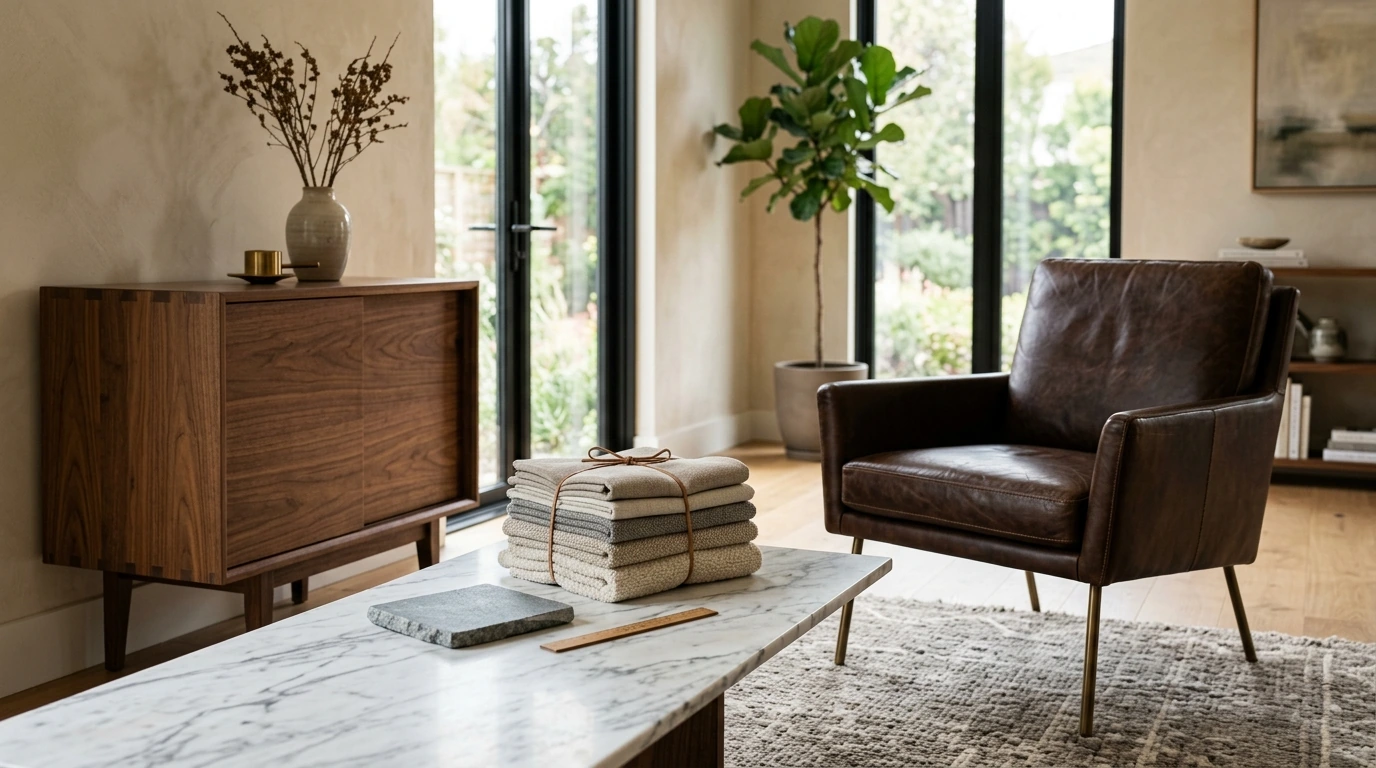
Luxurious Materials for Furniture: A Practical Checklist for High-End Interiors
The difference between “nice” and truly elevated furniture often comes down to materials: what they are, how they’re finished, and how they age. This guide breaks down the most sought-after luxury materials—wood, stone, metals, leather, and textiles—plus what to inspect before buying so the piece looks refined now and develops character over time.
What Makes a Material Feel Luxurious
Luxury is rarely about one flashy detail. It’s the combined effect of depth, touch, precision, and how a surface holds up to real life.
- Visual depth: Natural variation (grain, veining, patina) that looks layered rather than flat.
- Tactile feedback: Surfaces that feel substantial—cool stone, dense wood, full-grain leather, tightly woven textiles.
- Precision at edges and transitions: Clean joinery, crisp seams, consistent stitching, and controlled reveals where materials meet.
- Finish quality: Even coloration, no cloudy topcoats, no sticky feel, and a sheen level that matches the style (matte, satin, polished).
- Aging behavior: The best luxury materials develop patina gracefully rather than peeling, flaking, or pilling.
- Repairability: The ability to refinish, reupholster, re-stitch, or re-polish without replacing the entire piece.
Wood That Reads High-End (and What to Check)
Wood is often the first cue that a piece is heirloom-grade—or mass-produced with shortcuts. Species matters, but so does construction and finishing.
Premium hardwoods to know
- Walnut: rich color and refined grain that looks sophisticated even in simple silhouettes.
- White oak: structured grain and modern warmth; takes stains and clear finishes beautifully.
- Mahogany: classic depth for traditional profiles and statement casegoods.
- Maple: clean, contemporary look; can feel “quiet luxury” with the right finish.
- Teak: naturally oily and durable; ideal where moisture and wear are concerns.
Veneer vs. solid wood (and why veneer can be premium)
High-end furniture frequently uses thick, well-matched veneer over a stable core for large panels to reduce warping and seasonal movement. Look for book-matched or slip-matched patterns, consistent grain direction, and clean edge banding that doesn’t telegraph the seam.
Construction and finish cues
- Joinery signals: dovetails for drawers, mortise-and-tenon in frames, tight miters, and no visible gaps at corners.
- Drawer and door feel: smooth travel, soft-close hardware aligned correctly, and even reveals around door fronts.
- Finish depth: a “deep” look with visible grain texture; avoid thick, plastic-like coatings that obscure character.
- Red flags: warping, uneven stain blotching, fuzzy sanding marks, or end grain absorbing stain inconsistently on visible edges.
For deeper background on how wood behaves (movement, stability, performance), the USDA Wood Handbook is a strong reference.
Stone and Stone-Look Surfaces for Statement Pieces
Stone instantly elevates a room because it delivers both visual drama and physical presence—when it’s specified correctly and mounted responsibly.
Natural stone options
- Marble: iconic veining and luminous depth, with higher etching risk.
- Quartzite: generally harder and often more stain resistant than marble.
- Granite: durable and varied; can read traditional or modern depending on pattern.
- Travertine/limestone: soft, tonal, architectural; typically needs sealing and mindful use.
Engineered surfaces
- Engineered quartz: consistent appearance and low maintenance, but less heat tolerant.
- Sintered stone: performance-forward (heat/scratch resistance) with a modern feel; edge handling matters.
Inspection checklist for stone tops
- Stable, level mounting with no rocking or flex.
- Reinforced spans (especially dining tables and long consoles).
- Neatly finished underside and secure attachment points.
- Well-executed edges—either softly eased or intentionally crisp, but never accidentally sharp.
For practical care guidance (sealing, cleaning, and what to avoid), review The Care and Cleaning of Natural Stone from the Natural Stone Institute.
| Material | Best For | Strengths | Watch Outs | Maintenance |
|---|---|---|---|---|
| Marble | Occasional tables, consoles | Iconic veining, luminous depth | Etching from acids; can stain | Seal; wipe spills fast; use coasters |
| Quartzite | Dining tops, high-use surfaces | Hard, premium look with durability | Pattern variation; can still stain | Seal as recommended; gentle cleaners |
| Travertine/Limestone | Soft, tonal interiors | Warm, architectural presence | Softer stone; can scratch/etch | Regular sealing; avoid acids |
| Engineered Quartz | Family-friendly spaces | Consistent, stain resistant | Less heat tolerant; pattern can look flat | Low; avoid high heat directly |
| Sintered Stone | Modern, performance-led rooms | Heat and scratch resistance | Edge chipping if poorly handled | Low; follow manufacturer guidance |
Metals That Elevate Furniture (and How to Spot Quality)
Metal reads “luxury” when it’s weighty, precise, and finished with restraint. It reads “cheap” when plating wears through or welds look lumpy under lighting.
Leather and Upholstery Textiles Worth Paying For
Leather tiers, simplified
For terminology and care basics, Leather Naturally is a helpful reference point.
Textiles and cushion construction
Room-by-Room Material Pairing Ideas
Buying Checklist: Questions to Ask Before You Commit
Helpful Downloads
- Luxurious Materials for Furniture Checklist (digital download)
- Using AI to Practice Empathy Toward Yourself – Self-Compassion AI Guide (Digital eBook)
FAQ
Is veneer considered “lower quality” in luxury furniture?
No—premium veneer over a stable core is common in high-end casegoods, especially for large panels. Focus on veneer thickness, clean edge banding, well-matched patterns (book/slip matching), and overall joinery and hardware quality.
What’s the best stone for a dining table if maintenance is a concern?
Quartzite, engineered quartz, and sintered stone are popular low-fuss options compared with marble. Quartzite may still need sealing, engineered quartz should be protected from high heat, and sintered stone depends heavily on good fabrication and edge handling.
How can leather quality be checked quickly when shopping?
Look for clear labeling (full-grain or top-grain), subtle natural variation, and minimal plastic-like shine. The leather should feel supple yet dense, and the seams and stitching should be straight, consistent, and tight with no puckering.










Leave a comment