63-Inch Fluted 7-Drawer Dresser With Outlet: Guide
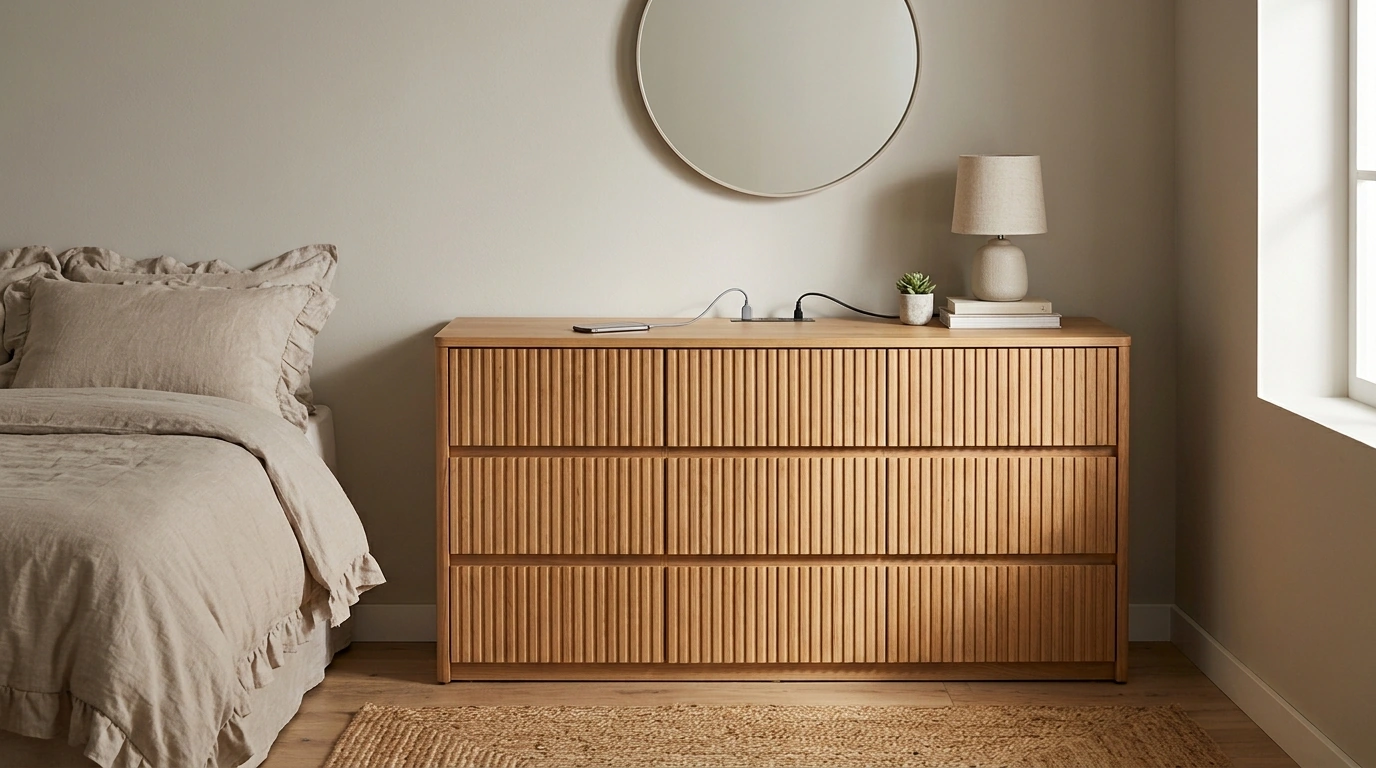
63″ Fluted 7-Drawer Dresser with Power Outlet: Storage, Style, and Charging in One
A fluted-front dresser brings subtle texture and shadow to a room, adding depth without feeling busy. Add integrated power, and daily routines get easier: charge a phone, run a table lamp, or plug in a device without dragging an extension cord across the floor. Below is a practical guide to what matters most in a 63-inch, 7-drawer dresser with a built-in outlet—plus placement, organization, safety, and setup ideas that keep your bedroom looking calm and functioning smoothly.
What Makes a Fluted Dresser Stand Out
Fluted drawer fronts create a vertical rhythm that can visually “lift” a wall and soften the look of wide casework. Instead of a flat façade, the grooves catch light throughout the day—especially helpful in bedrooms where you want warmth and dimension without adding clutter.
- Fluting adds texture and depth, helping large furniture feel lighter and more tailored.
- It complements modern, transitional, and Scandinavian-inspired spaces by adding detail without heavy ornamentation.
- It pairs easily with matte metal pulls, warm wood tones, and neutral textiles for a layered, approachable look.
Why Built-In Power Changes the Way a Bedroom Functions
A dresser with power isn’t just a “nice extra.” It can replace the role of a nightstand in tight rooms, create a clean charging hub, and keep cords away from walkways. When power access is on the furniture, the top becomes more useful—lighting, charging, and temporary device setup can all happen in one predictable spot.
- Keeps charging clutter contained: phones, tablets, smartwatches, and other small electronics can live near storage instead of on the floor.
- Supports everyday lighting: plug in a table lamp without running cords across the room.
- Helps create a “getting-ready zone” where tools can be powered temporarily (always follow heat/tool safety guidance).
- Reduces cord tangles by centralizing power to one furniture piece instead of multiple wall adapters.
| Use case | What to store in drawers | What to power on top |
|---|---|---|
| Nightstand alternative | Chargers, earbuds, books | Lamp, phone charger |
| Bedroom media spot | Remotes, controllers, cables | Small speaker, streaming box (if applicable) |
| Getting-ready station | Hair accessories, grooming items | Mirror light, hair tool (unplug after use) |
| Guest room setup | Extra linens, toiletries | Clock, phone charging |
At a Glance: 63″ Fluted 7-Drawer Dresser with Power Outlet
A 63-inch dresser hits a sweet spot: wide enough to feel substantial and anchor a wall, but still proportionate under a large mirror or art. Seven drawers make it easier to sort categories (instead of creating one or two “everything drawers”), and the integrated power keeps the top functional for charging and lighting.
| Check | Why it matters |
|---|---|
| Room width and walking clearance | Avoid tight pathways around bed corners and closet doors |
| Outlet location relative to dresser placement | Ensures the power cord reaches without extensions |
| Drawer organization plan | Prevents “junk drawers” and makes daily routines faster |
| Tip-over safety plan | Anchoring helps reduce furniture tip-over risk |
Where This Dresser Fits Best (Layout Ideas)
How to Organize 7 Drawers Without Wasting Space
| Drawer zone | Best for | Organizer tip |
|---|---|---|
| Top drawers | Accessories, sleepwear, small items | Use compartment trays |
| Middle drawers | Daily shirts, workout wear | File-fold to see everything |
| Bottom drawers | Jeans, sweaters, linens | Use deeper bins for bulkier items |
Power Setup and Cord Management
- Place the dresser so the power cord routes straight to the wall without pinching behind the unit.
- Use adhesive cable clips along the back edge to guide cords and keep the top surface tidy.
- Avoid overloading: keep high-draw appliances on dedicated outlets when possible, and unplug heat tools immediately after use. For general safety basics, see UL’s guidance on power strips and surge protectors.
- If the dresser top is used for charging, consider a small tray to keep devices from creeping toward the edge.
Safety Notes for Tall and Wide Dressers
- Anchor the dresser to the wall to reduce tip-over risk. The U.S. Consumer Product Safety Commission provides helpful background on furniture tip-over hazards.
- Avoid placing very heavy items on top unless the piece is specifically rated for it.
- Open fewer drawers at once; multiple extended drawers can shift weight forward.
- Keep frequently used items in mid-level drawers to reduce the temptation to climb or pull.
For additional context on clothing storage unit stability expectations, ASTM publishes the F2057 standard.
Styling the Top: Practical and Clean
Care and Maintenance for a Fluted Front
Featured In-Stock Picks
- 63″ Fluted 7 Drawer Dresser with Power Outlet — a wide, seven-drawer storage solution that keeps charging and lighting easy to manage in one spot.
- Wireless Game Controller for PS5 & PC with RGB, Turbo Vibration & Hall Triggers — a handy add-on for a “bedroom media spot,” with a dedicated drawer for controllers, cables, and accessories.
FAQ
Does a dresser with a built-in power outlet need a nearby wall outlet?
Yes. The built-in outlets are powered by the dresser’s cord, which still needs to plug into a standard wall outlet. Measure the reach ahead of time and avoid routing the cord where it can be pinched or pulled taut.
Is it safe to use hair tools with a dresser power outlet?
It can be, as long as the hair tool’s safety instructions are followed and the outlet is not overloaded. Keep hot tools attended, keep cords away from fabric, and unplug immediately after use.
Should a 63-inch dresser be anchored to the wall?
Anchoring is strongly recommended to reduce tip-over risk. Use the included hardware as directed, and make sure you’re securing into the correct wall structure (such as studs or appropriate anchors).









Leave a comment